Off-Campus Activity and Travel Procedure
|
|
|
The Off-Campus Activity and Travel Policy has been rescinded and the Off-Campus Activity and Procedure now takes its place under the Health & Safety Policy. This procedure outlines the requirements and processes that members of the university community must follow when participating in university affairs that involve off-campus activity and travel. Changes to the Field Research program were instituted in 2023, and for the most part, requirements won’t change. Instead of registering in UGo, field researchers traveling internationally will be asked to upload their travel itinerary to International SOS (iSOS) if they haven’t booked through Maritime travel. Travelers who book through Maritime will automatically be enrolled in the ISOS system. ISOS provides immediate updates on incidents or advisories, as well as a point of contact for security or health assistance in the event of an incident.
Stay tuned for the launch of a central page for Off-Campus Activity and Travel (October 15), which will provide additional information and direct travelers to the processes they need to follow.
Field research is defined in the procedure as:
Any off-campus research activity undertaken by members of the university community to collect, generate, or analyze all forms of data, including but not limited to environmental, biological, archival, ethnographical, anthropological, library or other research, reconnaissance field trips to locate suitable field sites or visits to a host institution, industrial or construction site. In the case of travel for the purposes of attending a meeting, conferences or similar and when undertaking research is not the primary purpose of the trip, your activity would not be considered field research.
If your research falls within this definition, please see Field Research Planning.
|
|
|
Increased Likelihood of Bear Encounters
|
|
|
In late August 2025, a fisherman was attacked by a grizzly bear with two cubs near the St. Mary River, south of Cardston, Alberta. Alberta's Fish and Wildlife Enforcement Services believe the attack was defensive, and bear traps and trail cameras have been set up in the area. The attack highlights ongoing concerns about bear activity in the province, following previous advisories and encounters in Kananaskis Country.
Extending the research activities into the late fall, when food sources for the bears are dwindling, may increase the likelihood of bear encounters. Researchers should be vigilant in following controls identified for the hazard, including regularly checking online resources for bear warnings, trail closures, and other relevant information.
|
|
|
Vehicle and Equipment Maintenance and Inspection Records
|
|
|
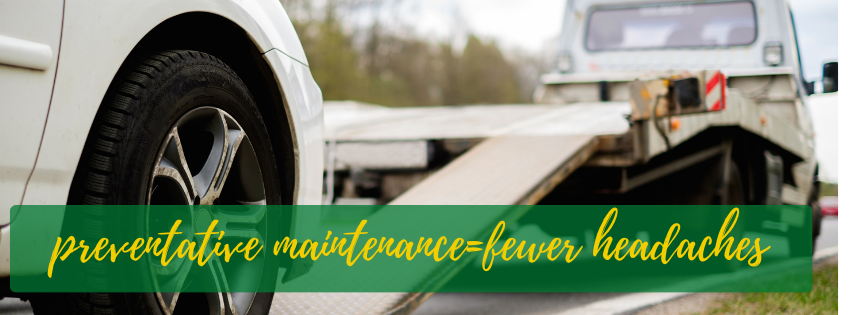
A department-owned, U of A vehicle was brought into the Transportation Services garage with a front end concern. The driver described hearing a loud noise and feeling shaking beneath the driver’s seat. The garage technician identified a serious mechanical issue where the truck's left front brake pad was worn to the extent that the brake was no longer functioning safely.
The University's Health, Safety and Environment Policy, Assignment of Accountability has a program for Inspection and Maintenance. Inspections and maintenance programs are key activities for identifying hazards and preventing work-related incidents, and are a legislated requirement. They are proactive activities designed to identify hazards before they lead to incidents and repair equipment and facilities before they fail or have reduced functionality.
Please see HSE's Lessons Learned to learn more details and the call to action for our supervisors and workers.
|
|
|
Field Research Safety Training
|
|
|
If you plan on working in the field shortly and your activities are assessed at a risk level 2 (medium) to level 5 (Extreme), you are required to take both the eLearning and the in-person training sessions. Please register using the Google form. Certificates will not be issued if participants fail to attend. You are required to take the training every 3 years.
The following sessions will be held in 2-25 (Tamarack Room), Materials Management Building as below:
Nov: Tuesday, November 4, 9 am - 12 pm
Dec: Tuesday, December 4, 9 am - 12 pm
Jan 2026: Tuesday, January 13, 9 am - 12 pm
Please note: Field School registrants are required to complete the online eLearning training but not the in-person sessions as the Field School Lead(s) will provide detailed orientation that includes a review of the hazard assessment and controls, emergency response plan, Daily Safety Log Book daily briefings, and the Go/No-Go tool.
|
|
|
Question: Does the University provide loaner laptops and phones for researchers when they travel abroad?
Answer: Jacqueline Littlewood, Director, Research Security, VPRI Research Integrity Support, encourages researchers to consult IST about loaner laptop devices. See this page, which states, “If you are going to a higher-risk destination, it is recommended that you request a Computing Travel Consultation.” There is a plan for burner phones to be available in the future.
Visit the Safeguarding Research Offices' webpage, where researchers can navigate key areas of research security, including risk assessment and mitigation, as well as implementation support.
|
|
|
|
|
Wilderness First Aid
When: November 8-10 (Fri, Sat, Sun) - 8:30 am - 4:30 pm
Where: Materials Management Building/Emily Murphy Park
Cost: $350.00
Pre-requisite: Current Intermediate First Aid
|
|
|
|
|
Driver Training/Authorization
HSE Fleet Safety Advisor, Jeff Brady (825-963-0613). provides driver training/evaluations and trailer training. Call or email Jeff to set up this training and become a U of A authorized driver.
|
|
|
|
|
Snowmobile Operator Training
The University of Alberta offers usually training at the beginning of January when we usually have enough snow. If you require training prior to then, please consult third-party suppliers for training such as ATVWorld or Alberta Safety Training. Email fieldoff@ualberta.ca to be put on the waitlist for U of A Training.
|
|
|
|
|
FRO Equipment Rental Program
|
The Field Research Office rents satellite phones, inReach devices, first aid kits, and AEDs at cost-recovery prices. We have a limited number of phones activated, so please give us at least 48 hours.
HSE/FRO has recently purchased new AEDs to refresh our existing stock, which will reach the end of life in December 2025.
Rental prices are:
Sat Phones: $40/week plus usage fees
InReach Devices: $35/week (Unlimited data plan)
First Aid Kits: $10/week (no restocking fee)
AEDs: free
|
|
|
|
|
The South Campus Storage Lot (southwest of the Saville Centre) has storage containers and cages for storing combustibles and most field equipment is stored there.
All users of the lot must request access online.
Please note the combination changes as of January 1 each year and users received an email with the new code.
No update on move: The storage lot move has been postponed at this time. If you have any questions, contact Peter Gegolick.
|
|
|
|
|
Field Research Office
Website
2-10 Materials Management Building
Edmonton, AB, Canada T6G 2R3
HRHSE
Email: fieldoff@ualberta.ca
W 780-492-8981
|
|
|
|